
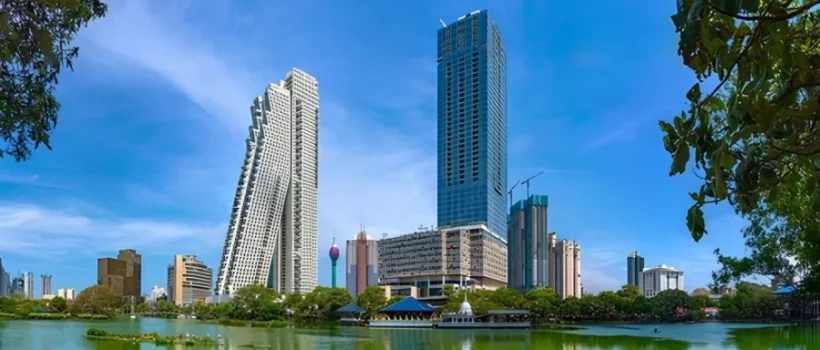

Why should I invest in real estate?
1. The Macro-Economic Argument: The “Recovery Play”
The primary case for investing is a classic “recovery” strategy. You are investing at a moment of stabilization after a major downturn, which presents the highest potential for appreciation.
- Economic Stabilization: After the crisis of 2022-2023, 2025 is a year of recovery.3 Inflation and interest rates have stabilized from their peaks. The Central Bank has lowered policy rates, making home loans more affordable (around 10-12%), which is reigniting local demand.4
- The “Currency Bargain”: For a foreign investor or a member of the diaspora earning in USD, EUR, or AED, the depreciation of the Sri Lankan Rupee (LKR) makes property exceptionally cheap. You are acquiring hard assets in a rebounding market at a significant currency discount.
- Renewed Investor Confidence: The market is no longer in a “wait-and-see” mode. Land prices in the Western Province are rising, and the apartment market is stabilizing.5 There is a clear and growing interest from the Sri Lankan diaspora, who are remitting money to buy property as both a secure “hedge” and a vote of confidence in the long-term future.
- Booming Tourism: Tourist arrivals are surging in 2025.6 The government is actively fueling this with visa-free policies and the development of new attractions.7 This directly drives demand and rental yields for hospitality properties, coastal villas (especially in the South), and short-term rentals (like Airbnb) in urban centers.
2. The Infrastructure Argument: Building Future Value
Sri Lanka is in the midst of transformative infrastructure projects that are unlocking new regions and creating tangible value.
- The “Expressway Effect”: The new Central Expressway (E04), connecting Colombo to Kandy, is a prime example.8 By cutting travel time, it is fundamentally changing the investment case for Kandy, making it a viable commuter-belt city and a high-growth tourism hub. Historically, areas touched by new expressways (like the Southern Expressway) have seen land prices appreciate significantly.
- Port & Logistics Hub: The expansion of the Colombo and Hambantota ports reinforces Sri Lanka’s role as a critical logistics hub. This is creating a new and growing demand for industrial real estate, specifically modern warehouses, e-commerce fulfillment centers, and cold-storage facilities.
- The “City within a City” (Colombo Port City): This is the single largest “game-changer” for the national real estate market.9 It is a USD 15 billion+ special economic zone (SEZ) designed to be a financial and services hub.10 In September 2025, new regulations were gazetted to provide massive tax incentives for “Businesses of Strategic Importance,” including 10-15 year corporate tax holidays.11 The first office buildings became operational in May 2025, marking its transition from concept to reality.12 This project will create 83,000+ high-paying jobs, driving demand for high-end residential and commercial property for decades.
3. The Sector-Specific Opportunities
The recovery is not uniform. The “smart money” is flowing into specific, high-growth sectors.
| Investment Sector | The Opportunity (Why to Invest) | Key Locations |
| Residential (Land & Housing) | Suburban Growth: The flight to the suburbs is a major trend. Land prices in areas with good infrastructure and schools are rising fast. | Colombo Suburbs: Piliyandala, Athurugiriya, Homagama High-Growth Zones: Kandy (due to expressway), Galle (tourism) |
| Residential (Apartments) | Foreigner-Friendly & High Yield: This is the easiest way for a foreigner to invest. You can buy freehold (full ownership). Demand for “Grade-A” buildings in the city center is high, offering good rental yields. | Colombo (01-08): Established luxury buildings. Colombo Port City: New, ultra-modern luxury developments. |
| Industrial & Logistics | E-commerce & Transshipment: The market is valued at over USD 7.7 billion in 2025 and is growing. The boom in e-commerce and Sri Lanka’s hub status is driving demand for modern warehouses. | Kerawalapitiya, Wattala: Key logistics zones near the port and airport. |
| Commercial (Office Space) | A “Flight to Quality”: While the overall market adapts to hybrid work, demand for new, high-quality (Grade-A) office space is strong, with occupancy over 70%. | Colombo CBD: Prime office towers. Colombo Port City: The new commercial hub. |
| Hospitality / Niche | Tourism Rebound: Directly benefits from the surge in tourist arrivals. Luxury properties are seen as bargains by international standards. | South Coast: Galle, Weligama, Mirissa (Villas) Hill Country: Kandy, Nuwara Eliya (Boutique Hotels) |
4. The Legal & Tax Framework (The “How-To”)
Crucially, the legal and tax framework has been simplified to attract foreign capital.13
For Foreign Investors: Your Legal Options
You cannot buy freehold land directly as a foreigner.14 This law remains. However, the following “front-door” options are straightforward and government-approved:
- Buy a Condominium (Apartment): This is your best option. A 2018 law abolished the old “4th floor and above” rule.15 You can now buy any unit, on any floor, with 100% freehold ownership, just like a Sri Lankan citizen. The only condition is that you must pay for it with an inward foreign remittance through a registered Inward Investment Account (IIA).16
- Lease Land (Up to 99 Years): This is the standard method for acquiring land or a villa.17 The 15% tax on lease agreements was abolished.18 As of April 1, 2025, you only pay a 2% stamp duty on the total value of the lease, making this a cheap and secure long-term option.19
Key 2025/2026 Tax Implications
- At Purchase (Buyer Pays):
- Stamp Duty: 3% on the first LKR 100,000 and 4% on the rest of the property’s value.20
- VAT: 18% VAT applies only if you buy a brand-new unit directly from a VAT-registered developer.21 It does not apply to secondary market sales.
- On Gains & Income:
- Capital Gains Tax: Gains from selling an “investment asset” are taxed at 10% (as per 2025 budget).22
- Rental Income (Non-Resident): Rent paid to you as a non-resident is subject to a 14% withholding tax.
5. The Risks and Challenges (What to Watch For)
An in-depth analysis must include the significant risks.
- Developer Risk (The #1 Risk): This is your most immediate danger. Colombo has a history of high-profile, unfinished projects. Your investment is only as good as the developer you choose. Do not invest based on marketing alone; conduct extreme due diligence on the developer’s track record, financials, and past projects.23
- High Construction Costs: Sri Lanka has high import duties on materials like steel and tiles.24 This inflates construction costs, which can eat into your returns if you plan to build or renovate.
- Bureaucracy: While improving, regulatory ambiguity and red tape (getting approvals, permits, etc.) can still be a significant source of delays and frustration outside of special zones like the Port City.
- Economic Fragility: The recovery is real, but it is still young. It remains dependent on political stability, consistent policy, and the successful continuation of its IMF program.
Analytical Conclusion: Should You Invest?
Investing in Sri Lankan real estate in 2025 is an aggressive growth play, not a “safe-haven” investment like in Singapore or London.
You should consider investing if:
- You have a high-risk tolerance and a long-term horizon (5-10+ years).
- You have access to foreign currency, allowing you to maximize the “currency bargain.”
- You are a member of the Sri Lankan diaspora looking to secure a foothold in your home country.
- Your investment is targeted at a specific high-growth niche: a freehold condominium, a suburban land plot, or a tourism-driven coastal property.
You should NOT invest if:
- You are a conservative investor who needs immediate liquidity or guaranteed returns.
- You are not prepared to do extensive due diligence on developers and legal titles.
- You are unsettled by political and economic volatility.
In short, the structural drivers—urbanization, infrastructure, and tourism—are powerful and positive. The economic and legal incentives are now aligned to attract you. If you can stomach the risk and are selective about what and with whom you invest, the potential for appreciation is among the highest in the region.

admin